More ramen engineering

Winkletter • 7 Nov 2026 •
I did a deeper research pass into ramen. Food science is always interesting, especially when it explains something I’ve seen but never really thought about. In Japanese ramen you have two main types of broth. Chintan is a clear broth made by keeping the water just below boiling so the fats don’t get sheared. Instead they’re skimmed off and reserved. A cloudy paitan broth, however, is cooked at a rollicking boil so the sheared fats end up emulsified, a bit like mayonnaise.
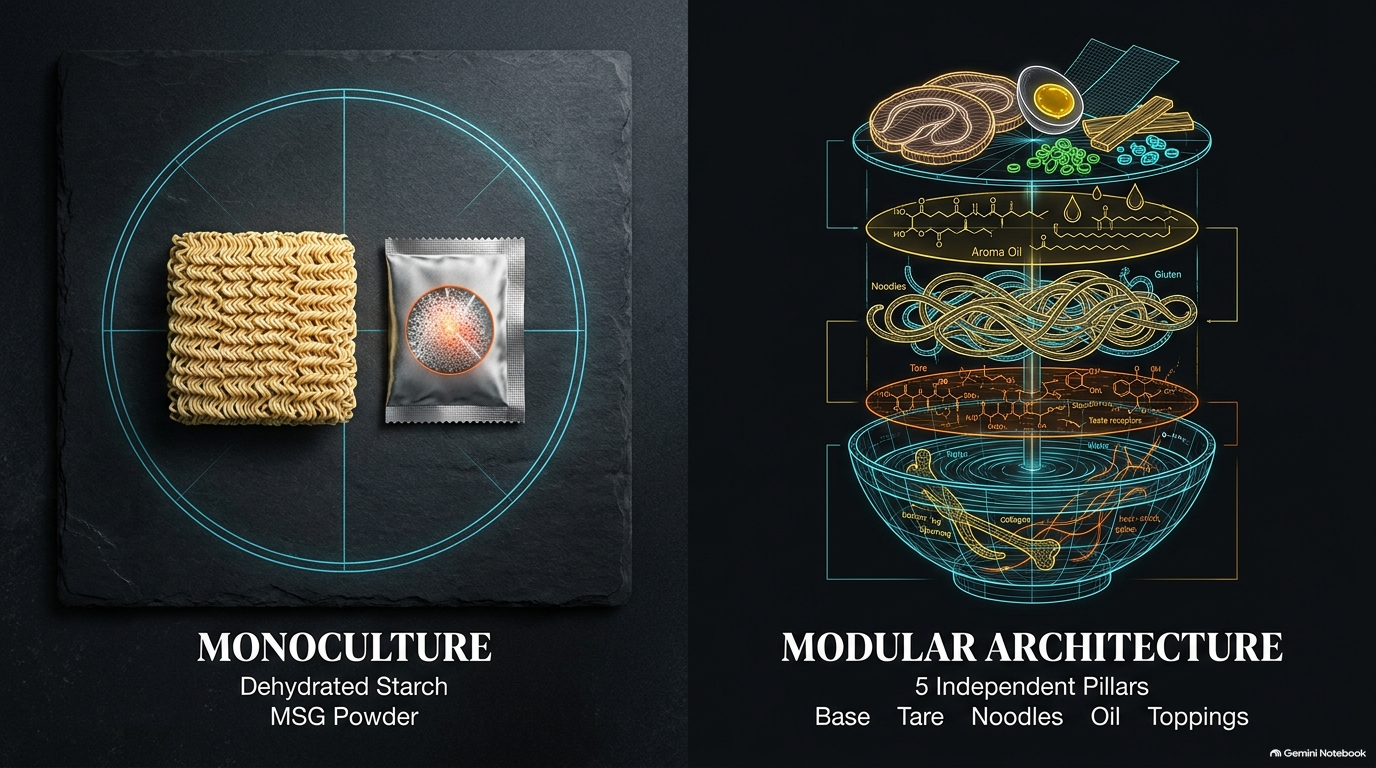
Unlike a Western-style soup, salt isn’t added to the broth while cooking. Instead a concentrated salty liquid called a tare is added to the bowl before the stock is mixed in. This could be a salt, soy sauce, or miso tare. Noodles are cooked separately, drained, and slipped into the bowl next. The chef might also add some aromatic oils, and finish with a number of toppings like seaweed, scallions, eggs, or a pork cutlet. One ramen bowl ends up being assembled from five layers of ingredients. And I haven’t even scratched the surface of the many different varieties of ramen.
That’s the highly-engineered restaurant-style ramen bowl from Japan. For instant ramen, I think South Korea wins the competition.
One South Korean version of instant ramyun I want to try uses egg and mayonnaise to make a creamier emulsified broth, and adds a slice of American cheese at the end to help capture the spicy capsaicin in the chili oil. Apparently some South Korean convenience stores have built-in cooking stations where foil lined ramyun bowls can be cooked in minutes. The convection stovetop also includes a faucet for dispensing water. Drop your mix-ins in the last few seconds, and you’re ready to eat. I love that there’s a whole dedicated supply chain in place just to cook instant ramyun on the go.
The US has a lot of catching up to do.
The Japanese really got this down to an art and science… always love eating ramen when in Japan